


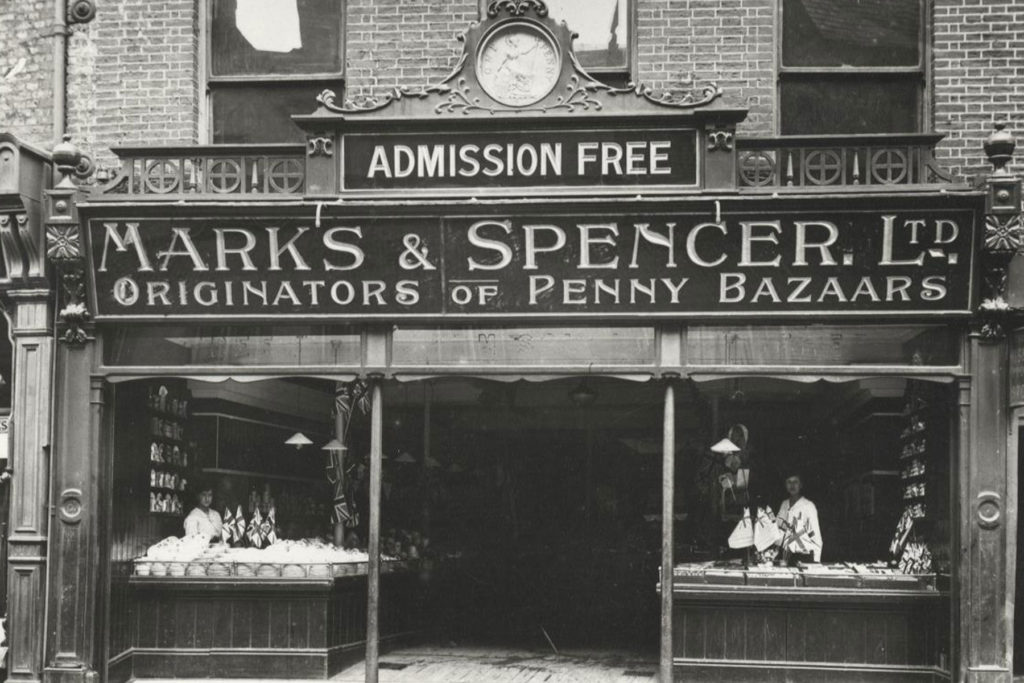
M&S is an important British business that many regard as a national institution (Butler, 2013) or even the royal family of retailing (Milmo, 2001). Since its conception in 1884, M&S stood through highs and lows of the country, and took part in various crucial moments of the United Kingdom, including World War II. Our group believed that by studying the story of M&S, it could help us understand British society from World War II and beyond in more detail, especially on the topic of how society treats women.
Hill and Allen (2021) studied that the definition of ‘patriarchy’ originated in the 1960s from feminist movement, to describe multiple structural issues women are facing in society caused by men, including the capitalist system. According to Mies (1998), “capitalism cannot function without patriarchy” (p.38), as workplaces were mainly created, owned or managed by men – making women labourers in a position that risks exploitation from both of their sex and work hierarchy. Especially when women were expected to fulfil both domestic and capital duty, making them work more for others and have less time for themselves than men by default (Fuchs, 2018).
While the concept is largely debatable for lacking comprehensiveness in terms of important social status or historical backgrounds like races, the framework is still relevant especially in the digital age where many movements gained their ground online, including both feminist and misogyny groups (Hill and Allen, 2021). Additionally, Fuchs (2018), saw the digital network similar to houses where they need many people to preserve it, but only the deeds of house owners or ‘software engineers’ (p.680) are recognised. Thus, with economic patriarchy, men are affected in this system as well.
According to Rose (2003), World War II was a significant time for the United Kingdom. British citizens, despite their different background, came together and led the way to liberate the whole Europe – these historical efforts still in high regard among people to this day as “Britain’s Finest Hour”. Yet, Rose (2003) also noticed that civilian efforts, especially female-led ones, were significantly downplayed. While women did not participate in the active military role as much as men, their endeavour in war-time industries, maintaining peace and keeping neighbourhoods safe did not get enough credit, or even received condemnation in return. It was because society saw that women should maintain their domestic responsibilities, such as raising children, instead of working in factories (Rose, 2003; Summerfield, 2013).
Summerfield (2013) observed that, although the effect of war may undeniably put women into more various kinds of jobs thereafter, female workers still faced discrimination from time to time and were assigned into lesser positions than male equivalents in the same field, without any promotion follow, though the work duties between genders were mostly the same, resulting in fewer wages in return. Since society generally thought if women would like to enter the workforce, they should not do ‘men’s jobs’ like engineering, but take ‘women's work’ such as secretarial roles – which were generally categorised as unskilled jobs – or else they would be accused of taking over men’s opportunities (Summerfield, 2013).
Rippin (2005) analysed that the history of Marks & Spencer shared many traits with fairy tales or heroic mythology, which mainly focus on a sole hero rescuing a princess, protecting their land, and saving the day all by himself while “women in the Marks and Spencer story are conspicuous by their absence” (p.581). While it cannot be denied that the company's ‘heroic act’ in clothing invention helped lessen class distinction, giving more clothing choice for women, the narrative still focuses only on its owner (Rippin, 2005), which has been all men until recently. In Rippin (2005) study, Marks and Spencer in the beginning was a family inheritance, passed from father to son: Michael Marks to Simon Marks. However, instead of continuing the legacy to direct next kin, they prefer outside men leaders over inner women. After Simon, despite the fact that his sisters were capable of business management, the ownership was skipped to brother-in-law, Israel Sieff (Rippin, 2005). Then the position continued to be among men for decades to come.
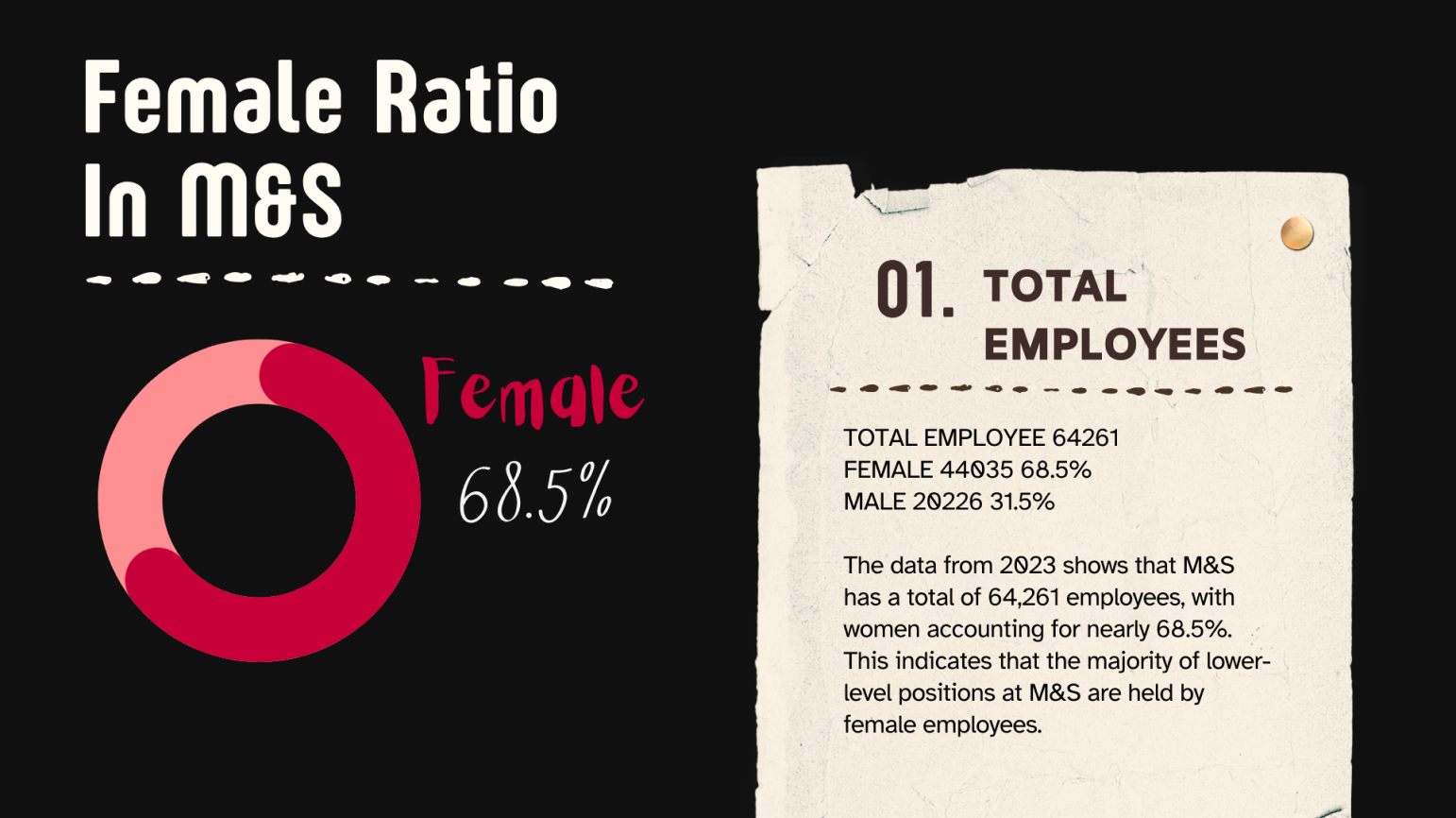
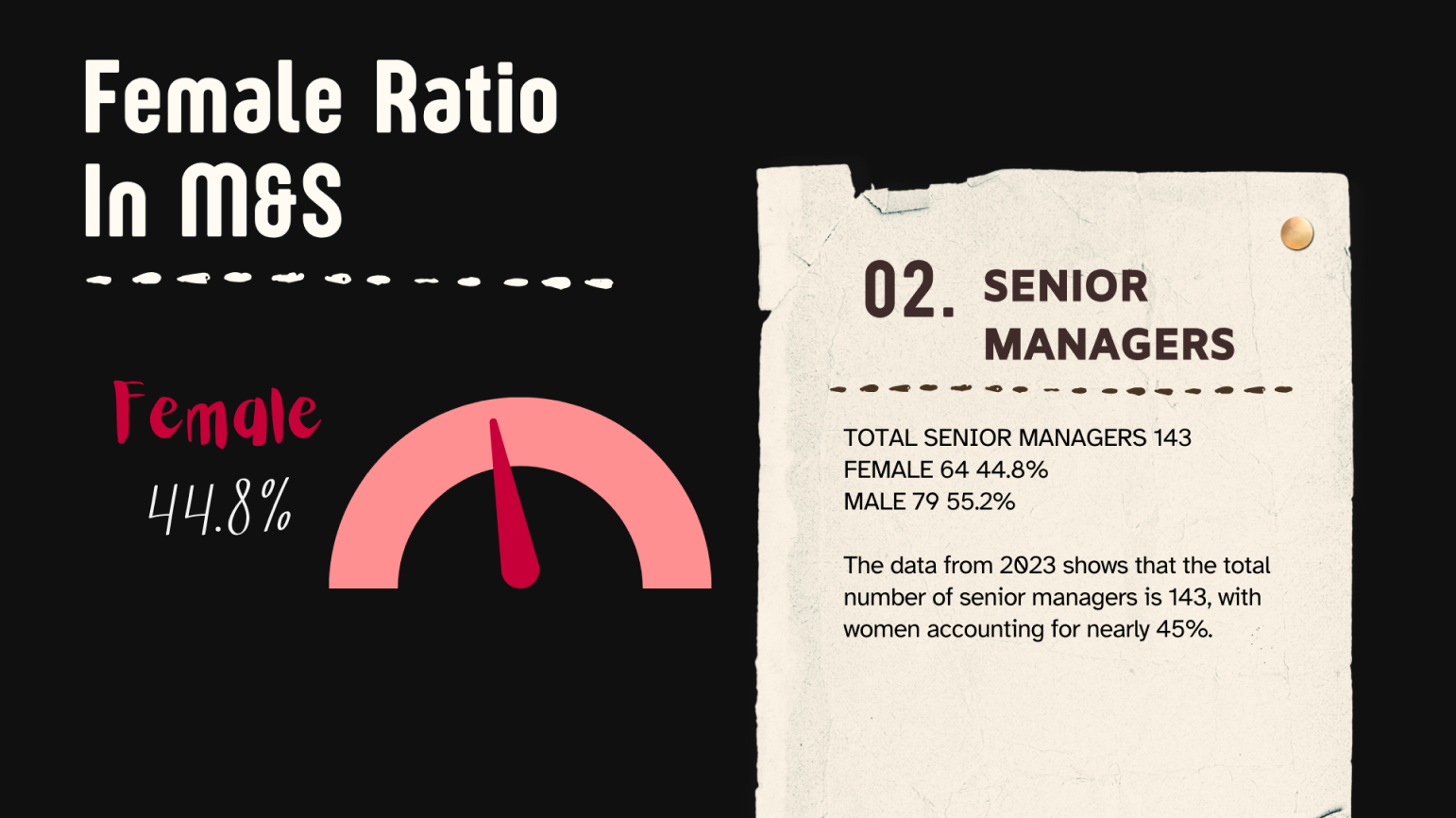
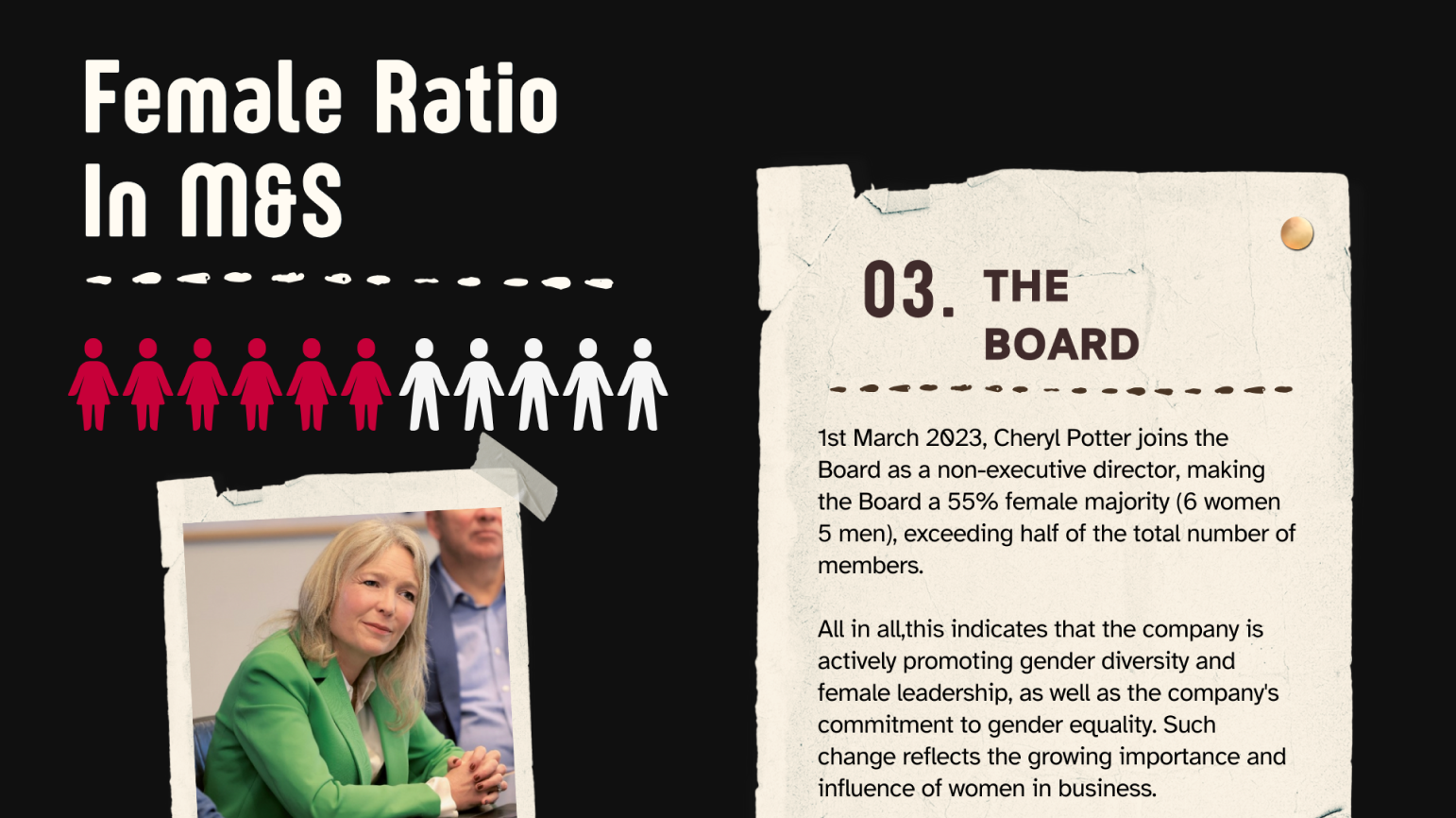
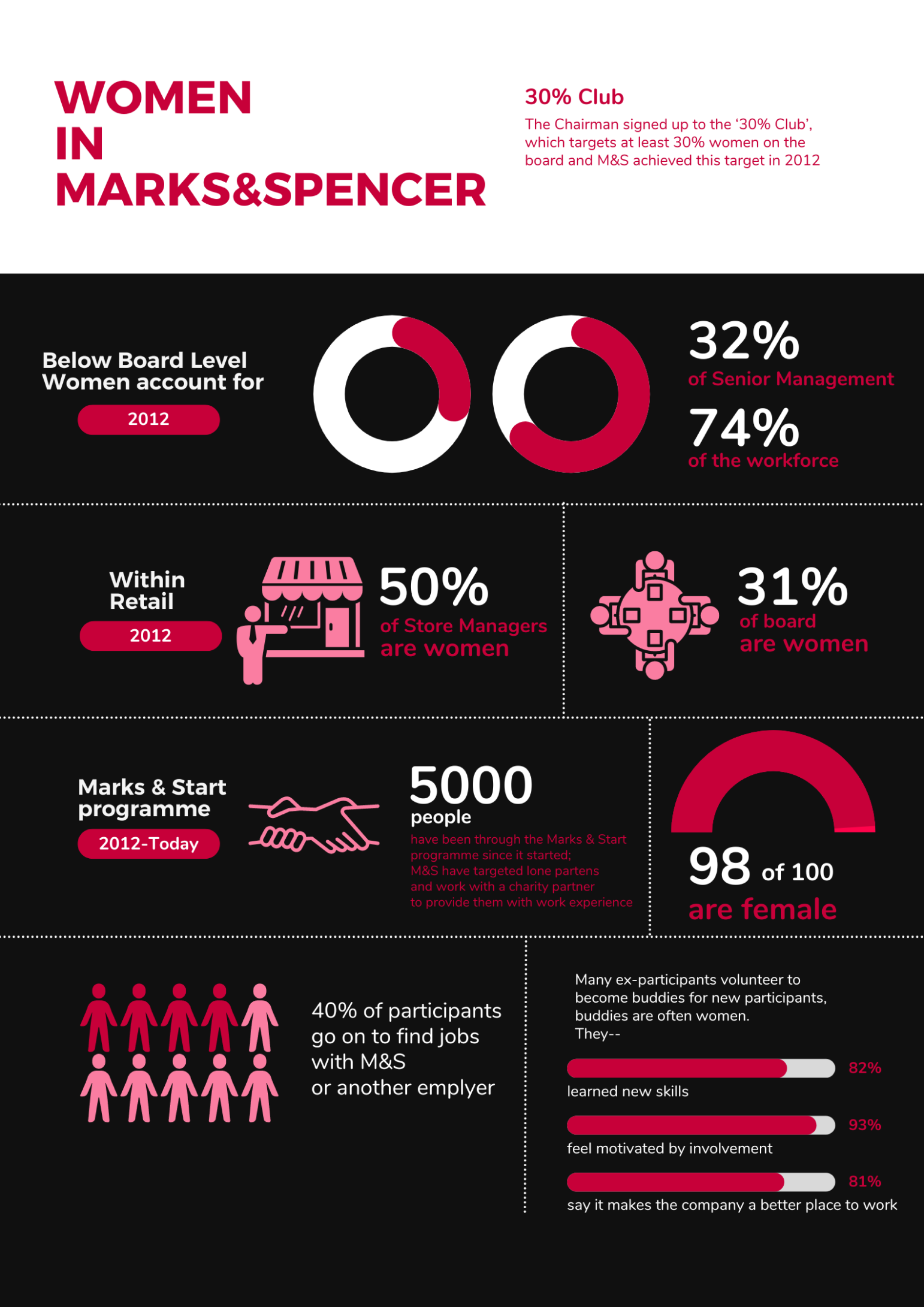
Nevertheless, as studied by the UK's Government Equalities Office in 2013, it suggested that Marks and Spencer staunchly support women employment. Their female workers were 74%, and their board had 31% of women with 32% senior management under board level Also, half of their store managers were women. Marks and Spencer also cared about female well-being, providing health support such as the well-received microsite ‘Manage your Menopause’. Additionally, the company has a programme called Marks & Start, giving social minorities such as single mothers and female offenders opportunity to be trained and back to workforces. The program also spanned out of the UK to developing nations such as India, Sri Lanka and Bangladesh.
The contrast in data will be carefully considered in our analysis to have a thorough conclusion.
 Friday Group 3

Has M&S really broken ‘the glass ceiling barrier’?
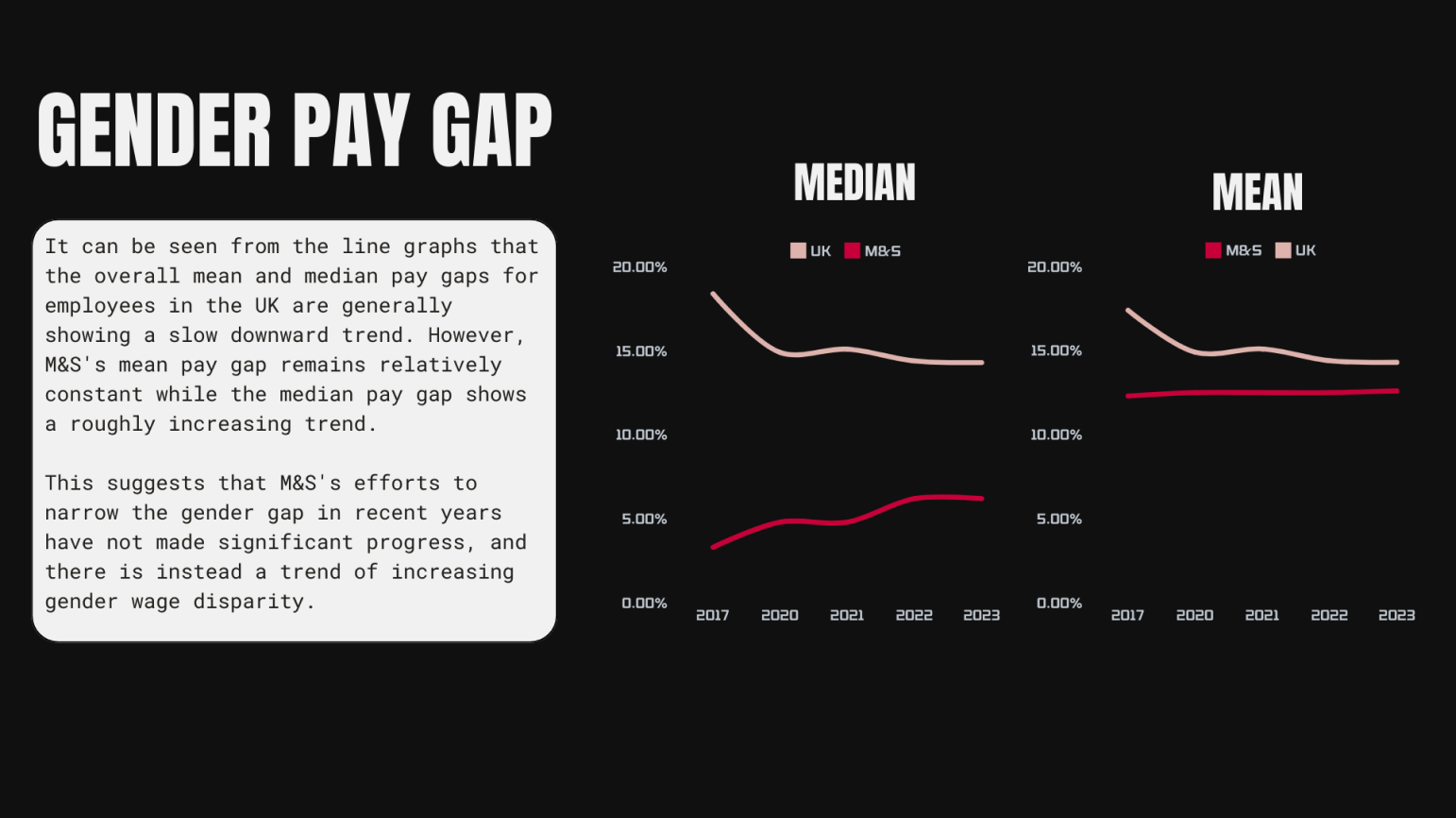
With increased female representation in leadership roles, efforts to deal with gender pay gaps, and support for work-life balance, M&S is paving the way for gender equality in the workplace. However, ongoing efforts are needed to promote diversity and inclusion further.
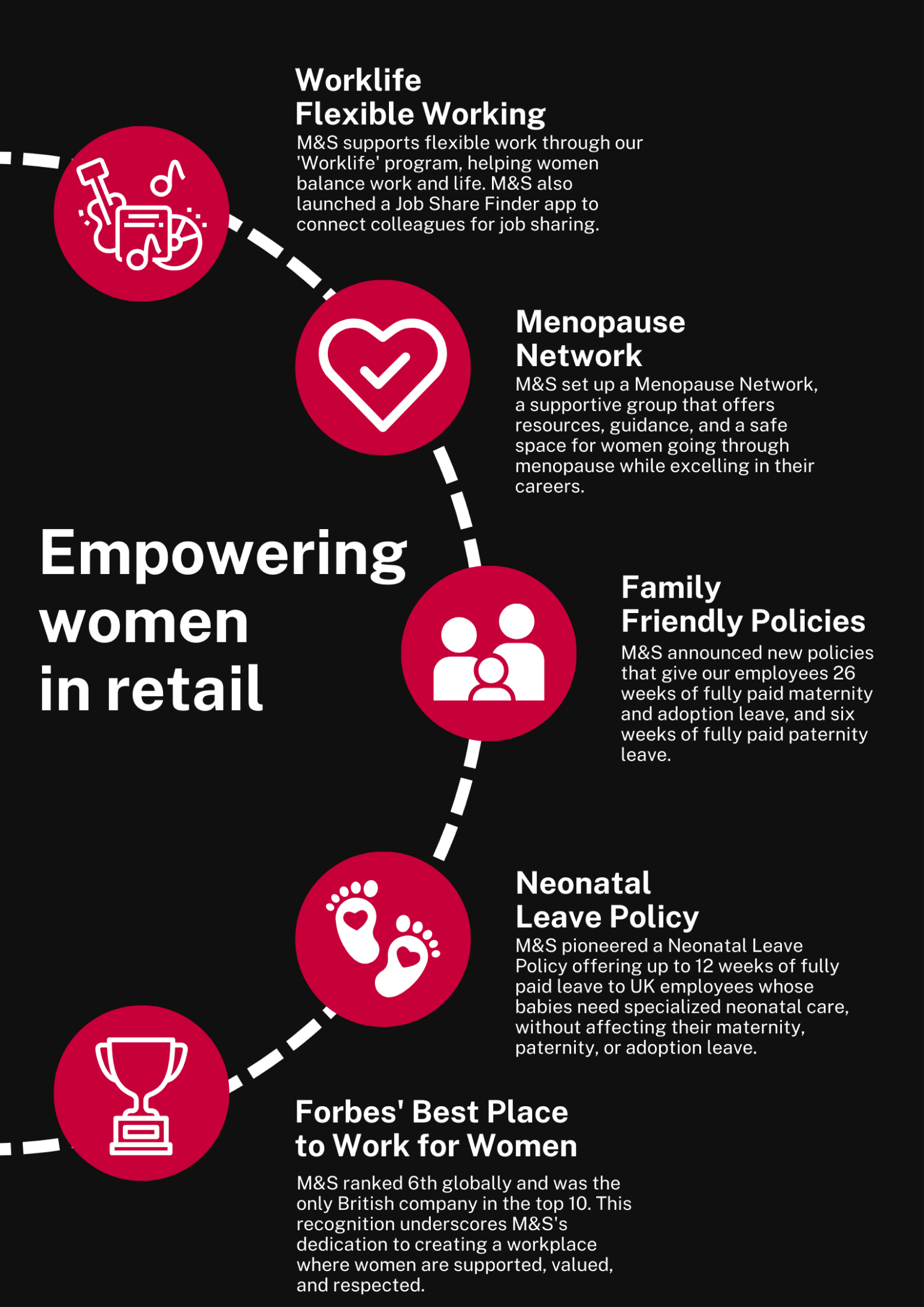
Female Employment Benefits
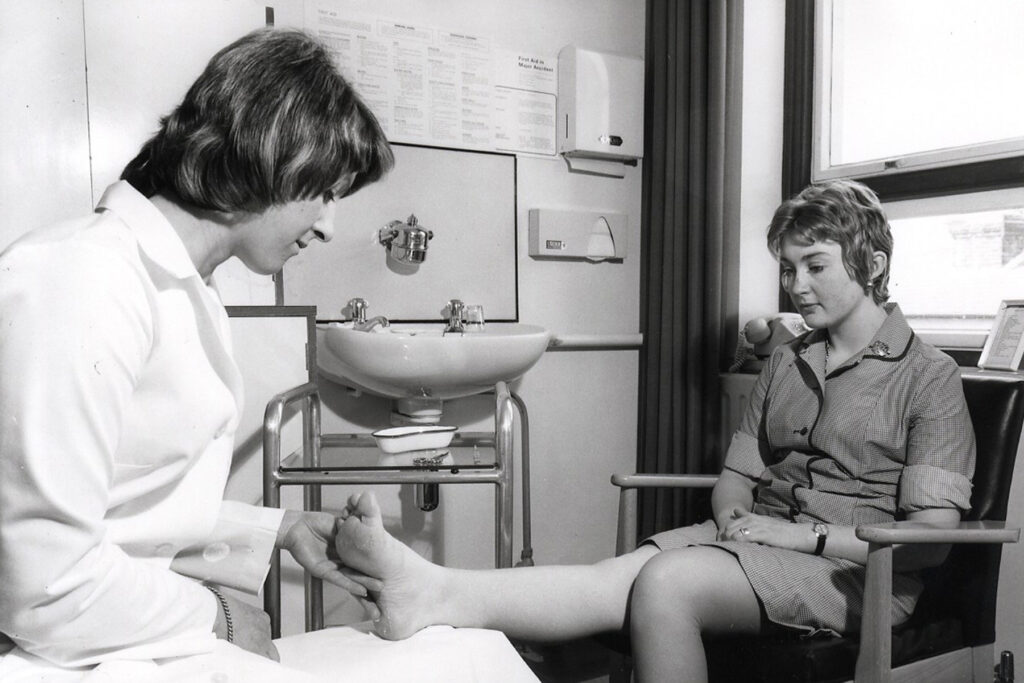
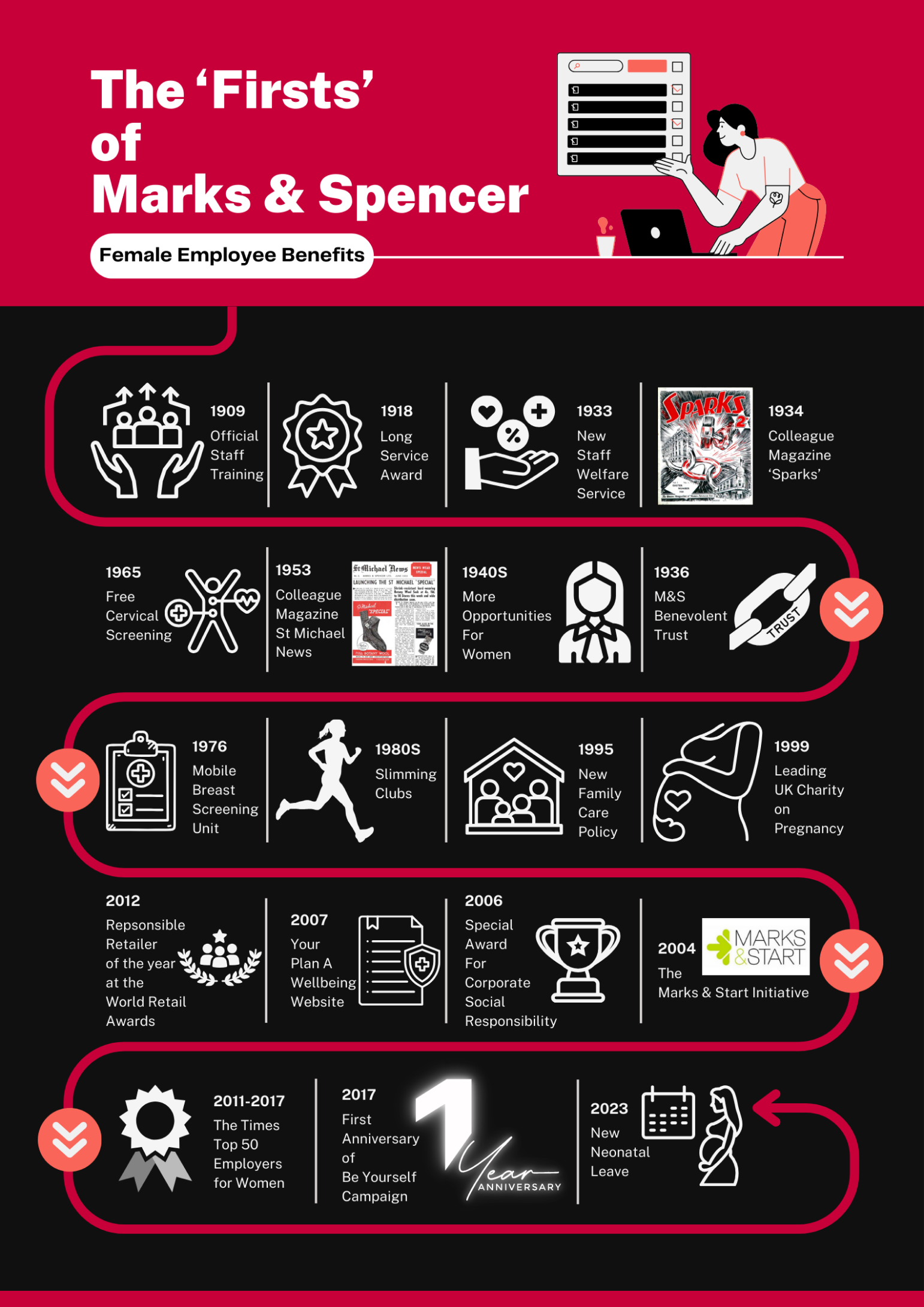
As one of the world's best-known retailers, M&S is known for its diverse and inclusive corporate culture. To ensure that female employees can be fully supported at work, M&S provides them with a series of comprehensive and effective policy benefits. These benefits not only reflect M&S's respect and care for women, but also help female employees to further realise their self-worth and success in the workplace.

Career Development and Leadership
From the Second World War to the 21st century, the organizational culture of M&S has continued to diversify, with women's roles becoming more and more active across Marks & Spencer's departments. The advent of new media has also brought corporate workplace philosophies and corporate values to life in new forms. This section showcases Marks & Spencer's dynamic approach to creating a workplace that encourages employee development, innovation and corporate social responsibility, with a particular focus on women's career development and leadership in the ever-changing world of retail and inclusion.
 Friday Group 3
Capitalism, Patriarchy and Gender at Marks & Spencer During WWII
Data from Marks & Spencer's staff magazines during World War II illustrate the intricate relationship between economic imperatives and entrenched gender norms that shaped women's workplace roles and treatment. The contradictions that emerge provide a compelling case study still relevant to contemporary feminist scholarship on gender, work and organizations.
The labor shortages of wartime catalyzed Marks & Spencer's promotion of women into management, reflecting capitalism's demand for human resources overriding traditional gender divisions of labor (Hartmann 1976). Company records show 50 potential female managers in May 1940 versus 120 potential male assistant managers. This numerical discrepancy hints at persistent gender barriers despite pragmatic needs.
However, precisely unpacking the extent of gender discrimination is challenging using only workforce data unaccompanied by qualitative accounts (Acker 1990). The figures could represent inequitable promotion practices or merely existing pipelines. Nonetheless, that any women breached masculinized manager ranks evidenced an incremental erosion of gender essentialism norms.
This dynamic aligns with Cynthia Cockburn's (1983) analysis of how World War II's unique conditions enabled women to gain provisional access to men's work, highlighting capitalism'sflow of labor demands over patriarchal strictures in crisis periods. Yet Marks & Spencer appeared to swiftly reverse course post-war, with reports of widespread demotions or resignations of female staff upon men's return.
This abrupt devaluation of women's contributions exemplifies how economic pragmatism only conditionally superseded gender norms. When capitalism's needs changed, deeply embedded patriarchal ideologies rapidly reasserted (Walby 1989). The rhetoric valorizing female staff seemed mere wartime lip service once male employees could reclaim their perceived rightful positions.
Feminist scholars argue such perpetual renegotiations and operational contradictions are inherent in organizations, which simultaneously cultivate capitalist productive forces while serving as "loci of gender relations" perpetuating oppressive social orders (Acker 1990; Cockburn 1991). Marks & Spencer's experience encapsulates this antagonistic coexistence of economic incentives temporarily challenging gender norms, only for cultural inertia to viciously retrench discrimination.
Yet even as the retailer reverted to male-dominated hierarchies, women's proven workplace capabilities during the war signaled irreversible progress. Their boundary-breaking precedents foreshadowed eventual institutional transformations as capitalist firms harnessed female labor to maximize efficiency and profits while broader feminist movements chipped away at patriarchal structures (Hartmann 1976).
Economic self-interest still motivates companies to tap female talent. Yet this gender-blind capitalist rationality coexists with cultural inertia reasserting masculine norms and workplace-family hostilities limiting women's equal participation (Ferguson 1984). Longitudinal studies show a familiar cyclical pattern of progress and backlash (Goldin 2006).
Ultimately, Marks & Spencer's WWII experience crystallizes how profit motives can temporarily disrupt gender orders before traditionalist retrenchments - underscoring capitalism and patriarchy's contradictory intersections shaping workplace gender relations across eras. As modern corporations continue navigating such tensions, this historical dialectic reminds us that true, enduring equity requires steadfastly persisting through inevitable frictions and setbacks.
Friday Group 3
Acker, J. 1990. Hierarchies, Jobs, Bodies: A Theory of Gendered Organizations. Gender & Society. 4(2), pp.139-158.
Butler, K. 2013. Why do we treat Marks and Spencer like a national institution? It's just another shop. [Online]. [Accessed 30 March 2024]. Available from: https://www.independent.co.uk/voices/comment/why-do-we-treat-marks-and-spencer-like-a-national-institution-it-s-just-another-shop-8835286.html
Cockburn, C. 1983. Brothers: Male Dominance and Technological Change. London: Pluto Press.
Cockburn, C. 1991. In the Way of Women: Men's Resistance to Sex Equality in Organizations. Ithaca, NY: ILR Press.
Department of Health & Social Care. 2023. 2023 gender pay gap report. [Online]. [Accessed 24 April 2024]. Available from: https://www.gov.uk/government/publications/dhsc-gender-pay-gap-report-and-data-2023/2023-gender-pay-gap-report
Ferguson, K.E. 1984. The Feminist Case Against Bureaucracy. Philadelphia: Temple University Press.
Findlater, S. 2022. Gender Pay Gap Report 2021. [Online]. [Accessed 24 April 2024]. Available from: https://corporate.marksandspencer.com/sites/marksandspencer/files/Annual%20reports/gender-pay-gap-2022.pdf
Findlater, S. 2023. Gender Pay Gap Report 2022. [Online]. [Accessed 24 April 2024]. Available from: https://corporate.marksandspencer.com/sites/marksandspencer/files/marks-spencer/results-reports-webcasts-and-presentation/Gender%20Pay%20Gap%20Website%20Statement%2029March2023.pdf
Findlater, S. 2023. Gender Pay Gap Report 2023. [Online]. [Accessed 24 April 2024]. Available from: https://corporate.marksandspencer.com/sites/marksandspencer/files/Gender%20Pay%20Gap%20Report%202023.pdf
Fuchs, C. 2018. Capitalism, Patriarchy, Slavery, and Racism in the Age of Digital Capitalism and Digital Labour. Critical sociology. 44(4-5), pp.677-702.
Goldin, C. 2006. The Quiet Revolution That Transformed Women's Employment, Education, and Family. American Economic Review. 96(2), pp.1-21.
Government Equalities Office. 2012. Marks & Spencer - Recruiting women from different backgrounds. [online]. [Accessed 12 April 2024]. Available from: https://www.gov.uk/government/publications/marks-spencer-recruiting-women-from-different-backgrounds
Hartmann, H.I. 1976. Capitalism, Patriarchy, and Job Segregation by Sex. Signs. 1(3), pp.137-169.
M&S Archive. 2023. M&S and the War Effort. [Online]. [Accessed 14 February 2024]. Available from: https://archive.marksandspencer.com/online-exhibition/wareffort/
M&S Archive. 2024. Employee Welfare. [online]. [Accessed 15 April 2024]. Available from: https://archive.marksandspencer.com/timeline/employee-welfare/
Marks & Spencer, Ltd. 1909. Astonishing bargains, Grand Annual, 1909-1910. [Online]. [Accessed 28 April 2024]. Available from: https://msheritage.access.preservica.com/uncategorized/IO_51aa3d6e-aac5-4f9f-a2ee-00e85ede91ae/
Marks & Spencer. 2018. Diversity, Inclusivity & Gender pay. [Online]. [Accessed 24 April 2024]. Available from: https://corporate.marksandspencer.com/sites/marksandspencer/files/Annual%20reports/2018/m-and-s-gender-pay-report.pdf
Marks and Spencer Company Archive. 2024. Employee Engagement Timeline. [Online]. [Accessed 27 April 2024]. Available from: https://msheritage.access.preservica.com/uncategorized/IO_bd2ccfb8-831d-41aa-80b8-d495ae59c845/
Marks and Spencer Company Archive. 2024. Human Resources Timeline. [Online]. [Accessed 27 April 2024]. Available from: https://msheritage.access.preservica.com/uncategorized/IO_f9de7dd0-7734-4b6f-8445-3772ceb05eb9/
Marks and Spencer Group plc. 2023. Reshaping M&S - Annual Report & Financial Statements 2023. [Online]. [Accessed 24 April 2024]. Available from: https://corporate.marksandspencer.com/sites/marksandspencer/files/2023-06/M%26S_2023_Annual_Report.pdf
Marks and Spencer. 2024. Empowering women in retail: Reflecting on a year of support and progress at M&S. [Online]. [Accessed 14 April 2024]. Available from: https://jobs.marksandspencer.com/our-stories/empowering-women-in-retail
Marks and Spencer. 2024. Marks and Spencer’s profile page. [LinkedIn]. [Accessed 5 April 2024]. Available from: https://www.linkedin.com/company/marks-and-spencer/posts/
Mies, M. 1998. Patriarchy and accumulation on a world scale: women in the international division of labour. London: Zed.
Milmo, D. 2001. M&S in need of modernization. [Online]. [Accessed 14 April 2024]. Available from: https://www.theguardian.com/business/2001/mar/29/marksspencer
Morgan, J. H. ed. 1954. Sparks. [Online]. [Accessed 25 April 2024]. Available from: https://msheritage.access.preservica.com/uncategorized/IO_60966031-b3a4-4b4b-a5dc-d8eec3b0eb73/
Rippin, A. 2005. Marks and Spencer-waiting for the warrior: A case examination of the gendered nature of change management. Journal of organizational change management. 18(6), pp.578-593.
Rose, S.O. 2003. Which people’s war? : national identity and citizenship in Britain 1939-1945. Oxford: Oxford University Press.
Spence, A. 1976. Sparks: Summer 1976. [Online]. [Accessed 25 April 2024]. Available from: https://msheritage.access.preservica.com/uncategorized/IO_fa0a5b3e-3858-4106-bd3f-c2a56f545583/
Summerfield, Penny. 2013. Women workers in the Second World War production and patriarchy in conflict. London: Routledge.
Walby, S. 1989. Theorising Patriarchy. Sociology. 23(2), pp.213-234.
White, N. J. 2023. Gender pay gap in the UK: 2023. [Online]. [Accessed 24 April 2024]. Available from: https://www.ons.gov.uk/employmentandlabourmarket/peopleinwork/earningsandworkinghours/bulletins/genderpaygapintheuk/2023